White-label portals
One platform that runs several branded apps, each with its own name, look and users. Six apps run on our home-care platform.
We build patient and provider portals, white-label or for one organization, and connect them to your EHR, CRM and messaging tools. Our white-label home-care platform runs six branded apps, and we have shipped Epic and athenahealth integrations.
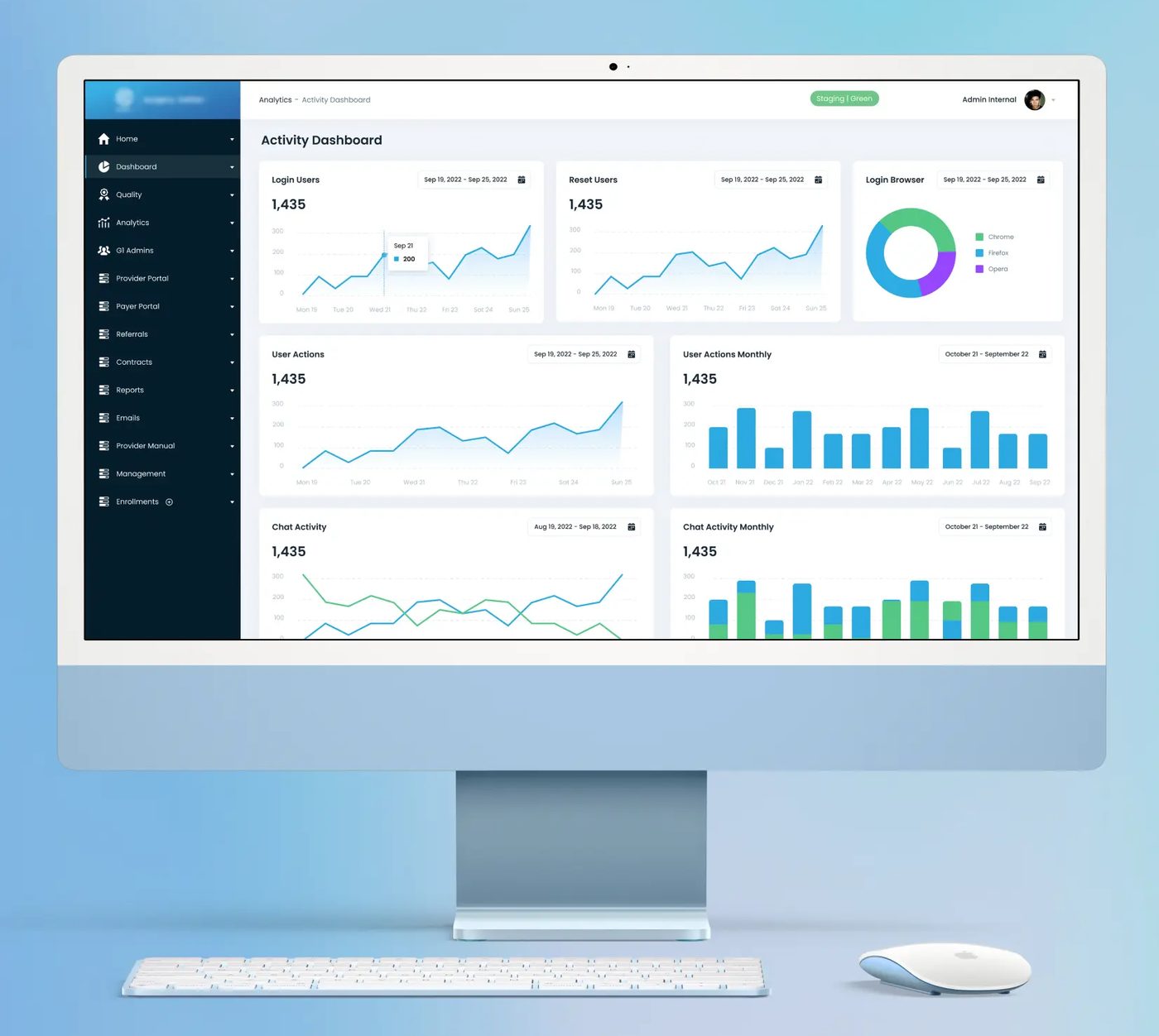
Onix Health builds patient and provider portals on web, iOS and Android, white-label or for one organization, and connects them to your EHR, CRM and messaging tools. Portals read appointments, records and results through FHIR or the vendor's API. We have shipped Epic and athenahealth integrations, and our white-label home-care platform runs six branded apps. We build against the EHR vendor's sandbox first and sign a BAA before the portal holds real patient data.
One platform that runs several branded apps, each with its own name, look and users. Six apps run on our home-care platform.
Appointments, records and results read from your EHR through FHIR or the vendor's API. For EHRs other than Epic and athenahealth we work from the vendor's documentation and sandbox.
A web portal and iOS and Android apps on the same data. Our home-care platform runs React Native apps on both stores, with a web dashboard for admins.
Referring providers submit and track referrals, claims and payments. In our provider portal they are checked and entered into the EHR automatically.
Secure chat with attachments, SMS and email through Twilio and SendGrid, and live chat routed to the right team.
Separate roles for patients, family, staff and admins. Each clinician sees only their own patients.
Five working days. We look at your current system, data and plans, and you get a written report with what we found and what we would do.
We pick the first features and the systems the portal must connect to, and you get a plan with dates. Designs and clickable prototypes come before code.
We build against the EHR vendor's sandbox and test data, and sign a BAA before the portal holds real patient data.
Web and mobile apps built in short releases, tested with real users, and penetration tested before launch.
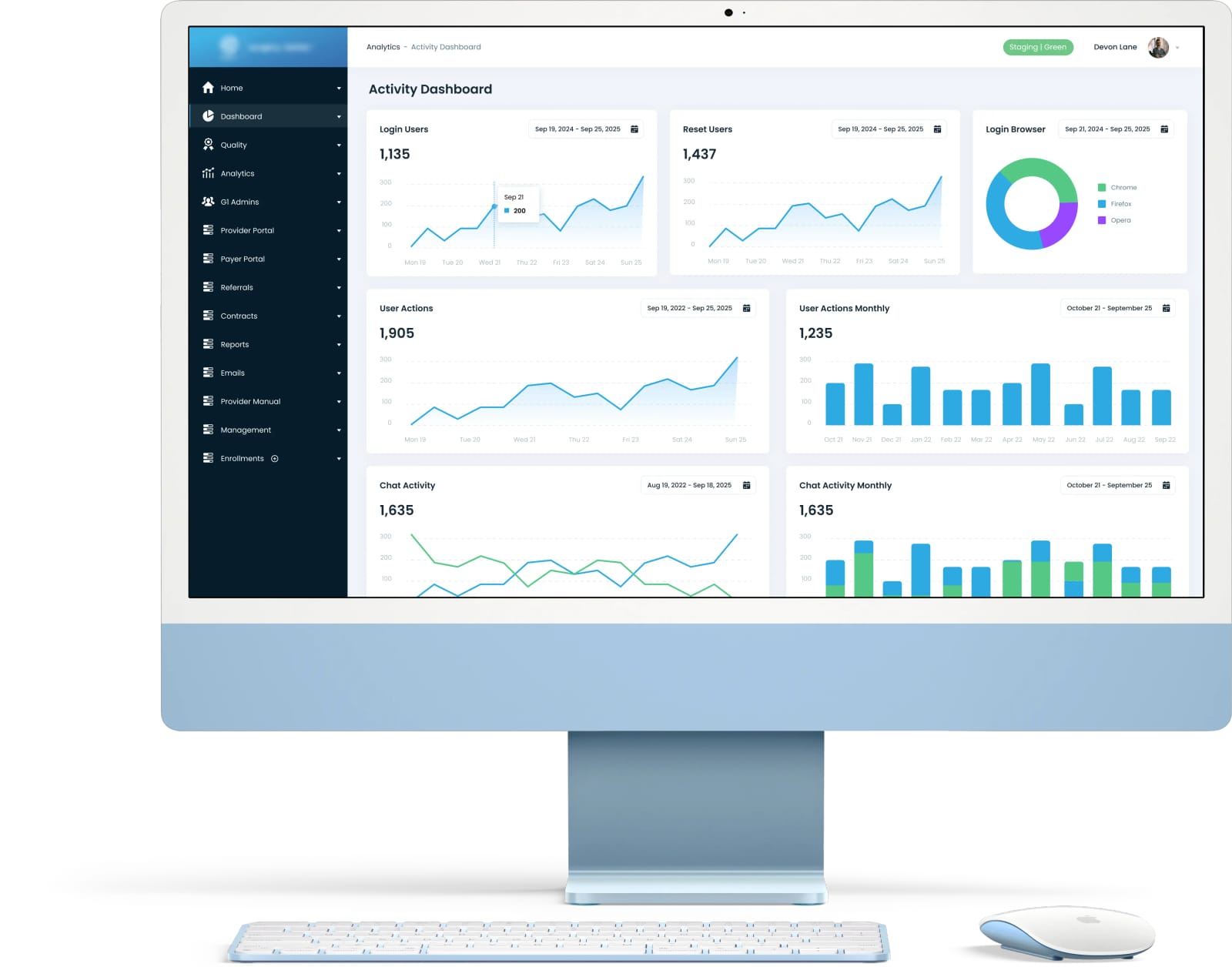
Self-service portal for healthcare providers in a state-wide network covering 120+ outpatient surgery centers. Claims and referrals 3× faster; 95% fewer inbound calls and emails.

White-label mobile + dashboard platform enabling healthcare organizations to launch branded apps for patient-network coordination. Six apps live, 5+ year partnership.
It is one portal platform that runs under several brands, so each clinic or health company gets its own name, look and users. We built one for an Australian digital health company, and six branded apps now run on it.
Yes. Most clients keep their EHR and add a portal that reads from it, and we build custom EHR modules where the EHR falls short. We have shipped Epic and athenahealth integrations.
The portal reads and writes data through the EHR's FHIR API or the vendor's own API, and older systems send HL7v2 messages. We build against the vendor's sandbox first and sign a BAA before real patient data flows.
Yes. We build a web portal and iOS and Android apps on the same back end and data. Our home-care platform runs React Native apps on the App Store and Google Play, with a web dashboard for admins.
Yes. For a US third-party administrator we built a provider portal where calls and emails to support dropped 95% and claims and referrals process three times faster.
It depends on the features and the systems it must connect to. After the free five-day audit you get a written report and a dated plan, so you can price it on facts.
Yes. Our provider portal is linked to the client's Salesforce, and our home-care platform sends messages through Twilio and SendGrid.
Build the invite into the clinical workflow, because patients use a portal more when their clinician asks them to. Then track invites, activation and return visits, not only sign-ups. Our patient engagement page covers how we design for adoption.
We build it to the HIPAA Security Rule and sign a BAA before any patient data enters the portal. Each clinician sees only their own patients, and the portal passes a penetration test before launch.