Electronic visit verification apps
iOS and Android apps where field staff sign in, track location during the visit, record the services provided and file a visit summary.
We build apps for care at home: visit verification and documentation for field staff, house-call schedules and routes, and platforms where patients, carers and family share tasks. We have worked on our white-label home-care platform since 2017, and six branded apps run on it.
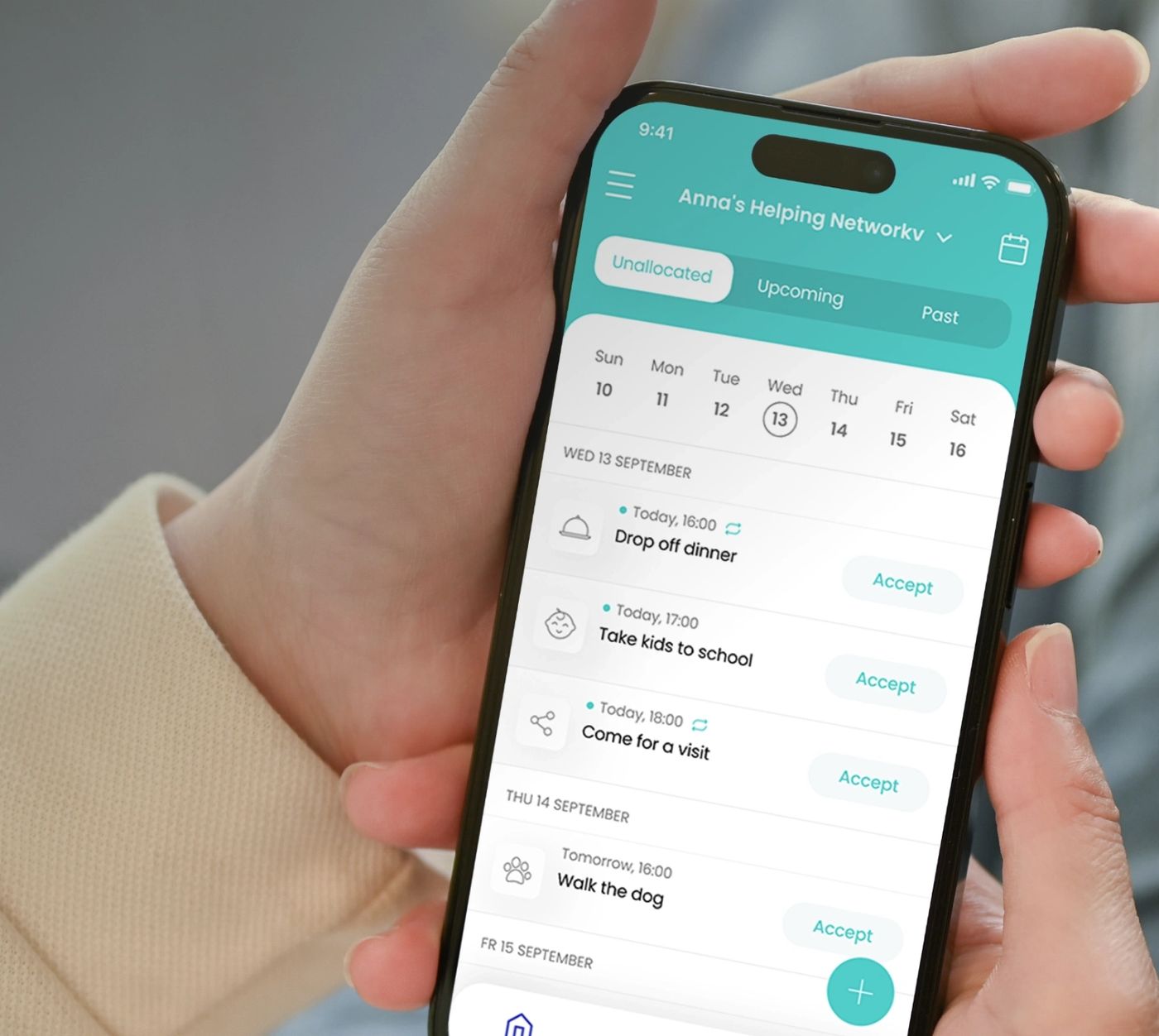
Onix Health builds home care software for field staff, office teams and families: electronic visit verification apps, visit documentation, schedules and routes, and care network apps where patients, carers and family share chat, a calendar and tasks. Data is cached on the device for homes with poor signal, and visit data syncs with your EHR and admin panel. We have worked on our white-label home-care platform since 2017, and six branded apps run on it.
iOS and Android apps where field staff sign in, track location during the visit, record the services provided and file a visit summary.
Service forms, report questionnaires and notes in text, audio or voice-to-text, tied to each visit.
Visit plans built from visit frequency, a daily cap per clinician and the distance between homes, on Google Maps.
Patients, carers, family and friends share chat, a calendar, tasks and check-in questionnaires around one patient.
Data is cached on the device, so staff keep working in homes and areas with poor signal.
Visit data synced with your EHR and admin panel. We have shipped Epic and athenahealth integrations, and for other systems we work from the vendor's documentation and sandbox.
Five working days. We look at your current system, data and plans, and you get a written report with what we found and what we would do.
We map a visit from start to finish with your field staff and office team: scheduling, check-in, documentation and reporting. You get a dated plan.
We sign a BAA before any real patient data reaches the apps.
Features ship in stages so field staff can test as the product grows, and the system passes a penetration test before launch.

White-label mobile + dashboard platform enabling healthcare organizations to launch branded apps for patient-network coordination. Six apps live, 5+ year partnership.
A Flutter app for medical workers on home visits: clients list, visit flow, service forms, a report questionnaire and a visit summary, working with the client's admin panel.
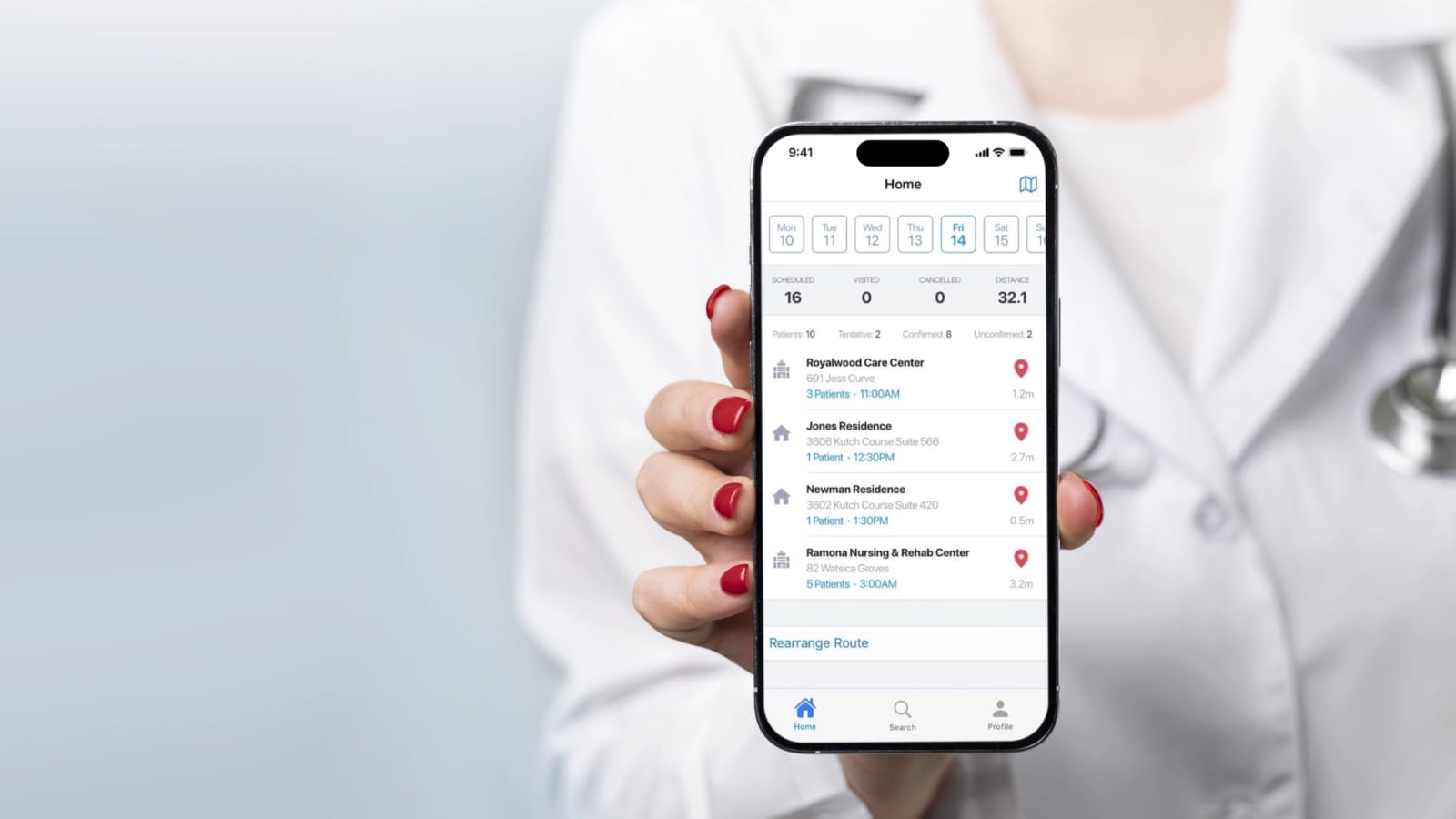
Mini-CRM + EHR-sync admin panel + PWA for doctors. Optimal route planning across multiple parameters (call frequency, doctor schedule, patient locations). Works with poor connectivity, with Google Maps integration.
It is a mobile app that records each home visit: who gave care, to whom, when, where and which services. Under the 21st Century Cures Act, US states must require EVV for Medicaid-funded personal care and home health services.
Yes. We built Cx360 EVV, a Flutter app for iOS and Android used by medical workers who visit patients with behavioral health needs at home. Workers sign in, track their location, open the client's profile, record the services and file a visit summary. A link to your state's EVV aggregator is built from the aggregator's documentation and sandbox.
Yes, as custom modules or a full system, though most agencies keep their EHR and add the home-visit parts it lacks. Our house-call scheduler, for example, syncs with the clinic's EHR and gives doctors their routes and patient history in the field.
Yes, we build the software a hospital-at-home program runs on: remote monitoring, video visits, visit scheduling and care-team apps. The free five-day audit maps which parts your program needs and what your EHR must receive.
It is software where patients, clinicians, carers and family coordinate care in one place. Ours for an Australian digital health company has chat, a calendar, tasks and check-in questionnaires, and six branded apps run on it.
Yes, if it is built for it. Our house-call app caches data on the phone, so doctors keep working where the network signal is poor.
We build it to the HIPAA Security Rule and sign a BAA before any patient data reaches the apps. Each clinician sees only their own patients, and the system passes a penetration test before launch.